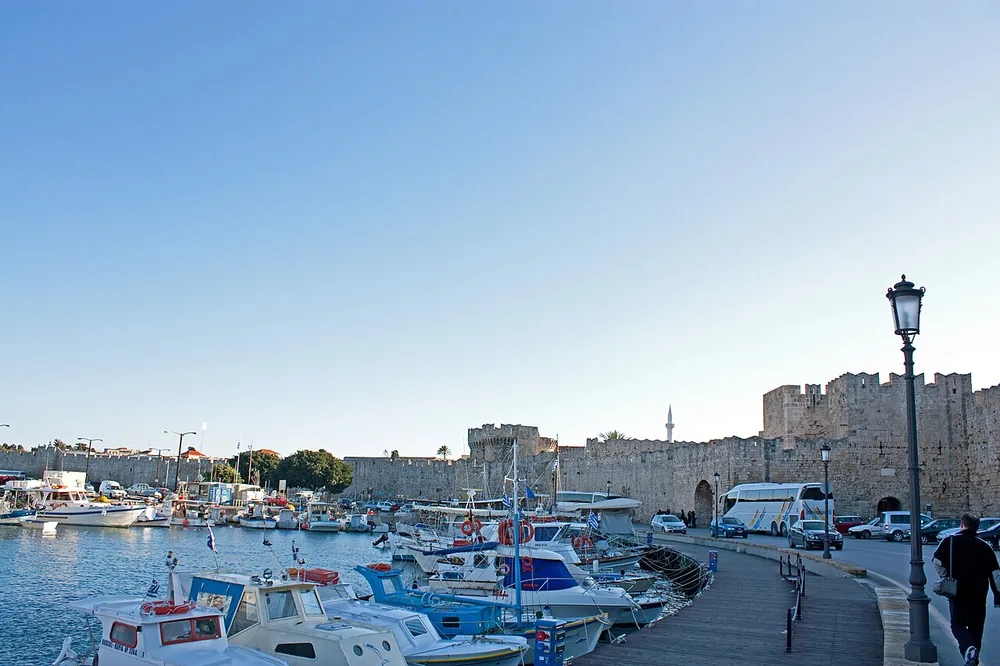
The Medieval City is the UNESCO property
Rhodes is a Greek island in the Dodecanese with historic townscapes, coast, villages and archaeological places. The Medieval City of Rhodes entered the UNESCO World Heritage List in 1988. This designation refers to that defined historic area, not the entire island.
Walking through its gates and streets reveals walls, reused buildings and everyday life within a historic setting. Take time over the relationship between structures instead of trying to enter every museum.
The island extends beyond the old town
Official Greek tourism information introduces mountains, villages and archaeology alongside beaches. Lindos, on the southeast of the island, is a separate settlement known for its acropolis. It needs a different road journey and walking plan from Rhodes Town.
For a short ferry visit, remaining in town can leave more useful time than combining distant destinations. An overnight stay offers greater flexibility, subject to current transport and service information.
Connect context with practical preparation
The coastal histories of Rhodes and Marmaris help place the journey in a wider maritime setting. Use the short-visit guide for a workable walk, and the passenger port guide for arrival and return.
Check official entry requirements for your circumstances separately. Island culture and sightseeing information do not establish travel-document approval.
Frequently asked questions
Is all of Rhodes a UNESCO World Heritage Site?
No. The listed property is the Medieval City of Rhodes.
Are Lindos and the old town in the same place?
No. Lindos is a separate southeastern settlement requiring its own journey.
Where should a one-day visit focus?
Rhodes Town and the old town form a balanced starting point; distant stops need separate transport and return planning.